Policy
Immigration & Border Control
Hanson continues to campaign on strict immigration caps and stronger border enforcement, a position that resonates strongly with her core voter base in regional and outer-suburban Australia.
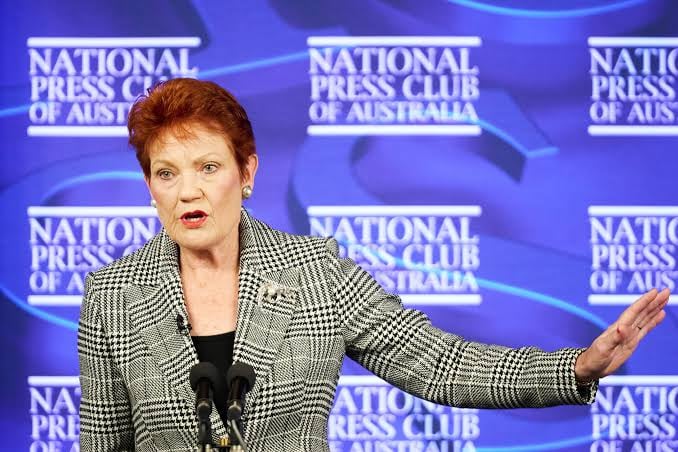
As the next federal election draws closer, One Nation's veteran leader is making noise again. We examine Pauline Hanson's political standing, her campaign platform, and whether she has a genuine shot at expanding her influence in 2025.
Pauline Hanson is one of Australia's most enduring and polarising political figures. First elected to the House of Representatives in 1996 as an independent for Oxley, Queensland, she went on to found One Nation — a party that would reshape the contours of Australian political debate for nearly three decades.
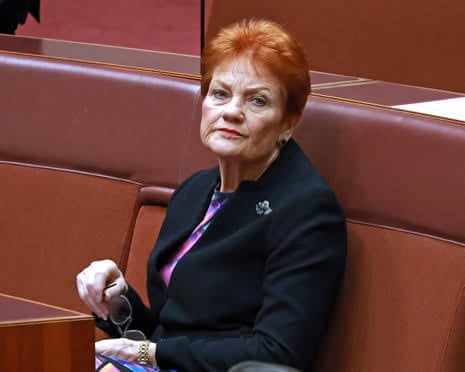
After a turbulent period that included a brief imprisonment (later overturned), Hanson returned to federal parliament in 2016 as a Senator for Queensland, a seat she has held since. Her political brand is built on outspoken nationalism, scepticism of immigration, opposition to multiculturalism, and a fierce advocacy for rural and working-class Australians who feel left behind by the major parties.
Heading into the next election, Hanson remains One Nation's most recognisable asset. Her ability to attract protest votes from disaffected Australians — particularly in regional Queensland and Western Australia — continues to make her a factor that neither Labor nor the Coalition can afford to ignore.
Hanson continues to campaign on strict immigration caps and stronger border enforcement, a position that resonates strongly with her core voter base in regional and outer-suburban Australia.
One Nation opposes net-zero emissions targets and advocates for cheaper, coal-based energy — a message that cuts through in Queensland mining communities and among households struggling with power bills.
Following the defeat of the Voice to Parliament referendum, Hanson — a vocal 'No' campaigner — is positioning One Nation as the party that 'listened to the people' on Indigenous policy reform.
One Nation's primary vote has historically hovered between 3–6% nationally, but the party's preferential and Senate performance consistently punches above that headline figure. Hanson's personal vote in Queensland remains her strongest card.
Senate prospects: Hanson is widely expected to retain her Queensland Senate seat. One Nation's Senate strategy — running disciplined ticket campaigns in Queensland, Western Australia, and New South Wales — could see the party return two or three senators, giving it meaningful crossbench leverage.
Lower House: One Nation's path to winning lower house seats remains narrow under preferential voting, as major-party preferences typically flow away from them. However, in a fragmented political environment with rising disillusionment toward both Labor and the Coalition, surprise results in regional Queensland seats cannot be ruled out.
Preference deals: The direction of One Nation's preference recommendations will be closely watched. In past elections, these deals have influenced outcomes in marginal seats, making Hanson a kingmaker even when One Nation itself doesn't win seats outright.
Australians are fed up with being ignored by the major parties. They want someone who will stand up and say what they're thinking. That's what One Nation has always done, and that's why we're still here after nearly 30 years.
One Nation typically polls between 3–6% of the national primary vote. While this is modest, the party's Senate ticket strategy and preference flows mean its electoral impact is disproportionately larger than the headline figure suggests.
Yes. Hanson is widely considered a strong favourite to retain her Queensland Senate seat. Her personal brand and loyal voter base in Queensland make her one of the more secure crossbench senators heading into the election.
One Nation is campaigning primarily on immigration reduction, opposition to net-zero climate targets, cheaper energy, opposition to 'woke' cultural policies, and a general platform of putting 'ordinary Australians first.' The cost of living crisis has given these messages renewed traction.
It is difficult but not impossible. Preferential voting makes it hard for minor parties to win lower house seats without major-party preference support. However, in deeply disaffected regional electorates — particularly in Queensland — a strong swing toward One Nation could produce surprise results.
The defeat of the Voice to Parliament referendum in October 2023 was seen as a political boost for Hanson, who was one of its most prominent opponents. The result validated her reading of the electorate and has energised her base heading into the election campaign.
How the Greens, One Nation, and the teal independents are reshaping the two-party system and what it means for the next parliament.
Queensland has long been One Nation's heartland. We map the key seats where Hanson's preferences and primary votes could decide the outcome.
Despite decades of controversy, One Nation's ability to mobilise disaffected voters means Labor and the Coalition must always factor Hanson into their electoral calculations.